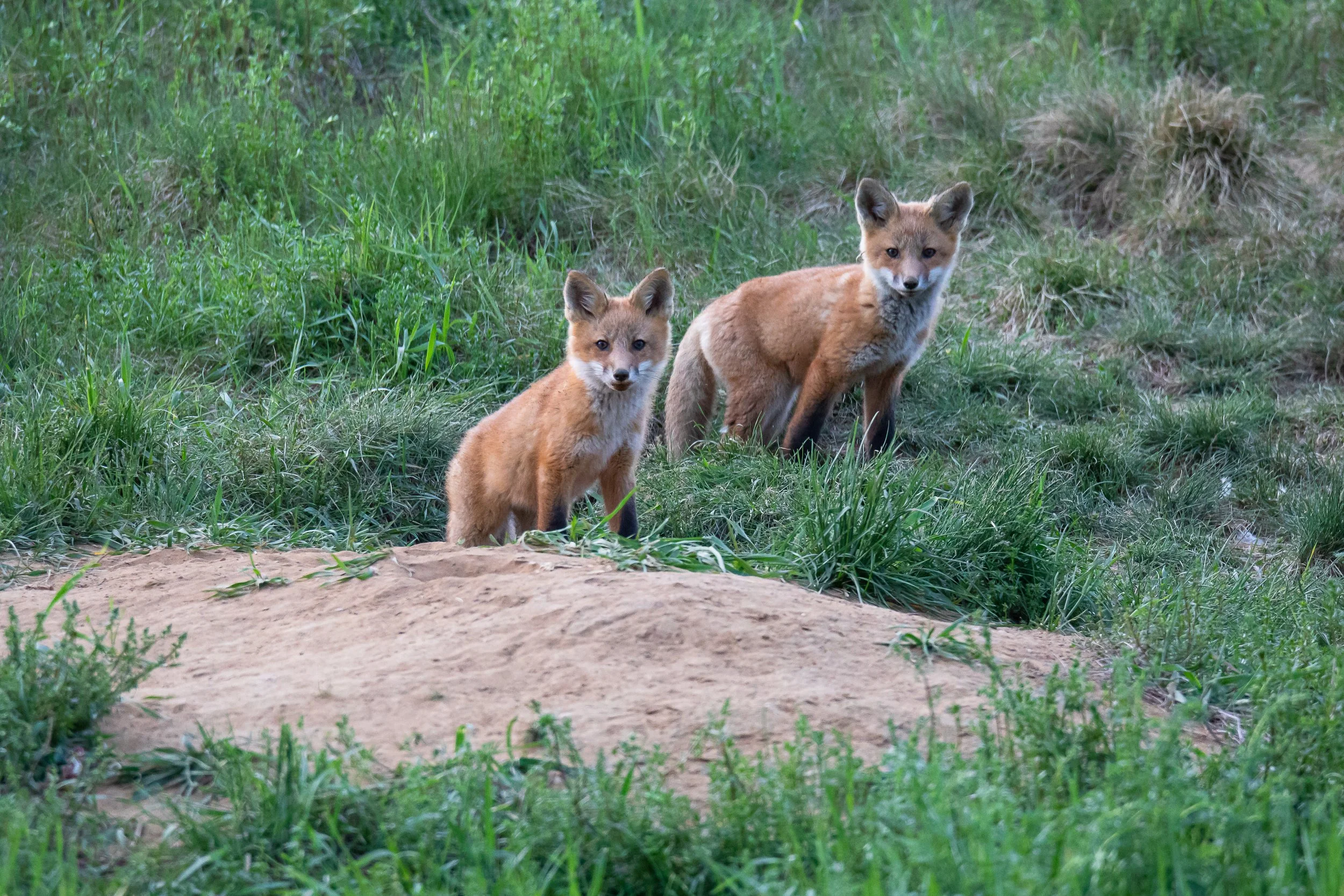
How to Find and Photograph a Fox Den Ethically
Note: I publish a newsletter on Substack. This is an example of an article I publish twice a month other there. To subscribe to that newsletter go to Wild Photo Ideas | Substack
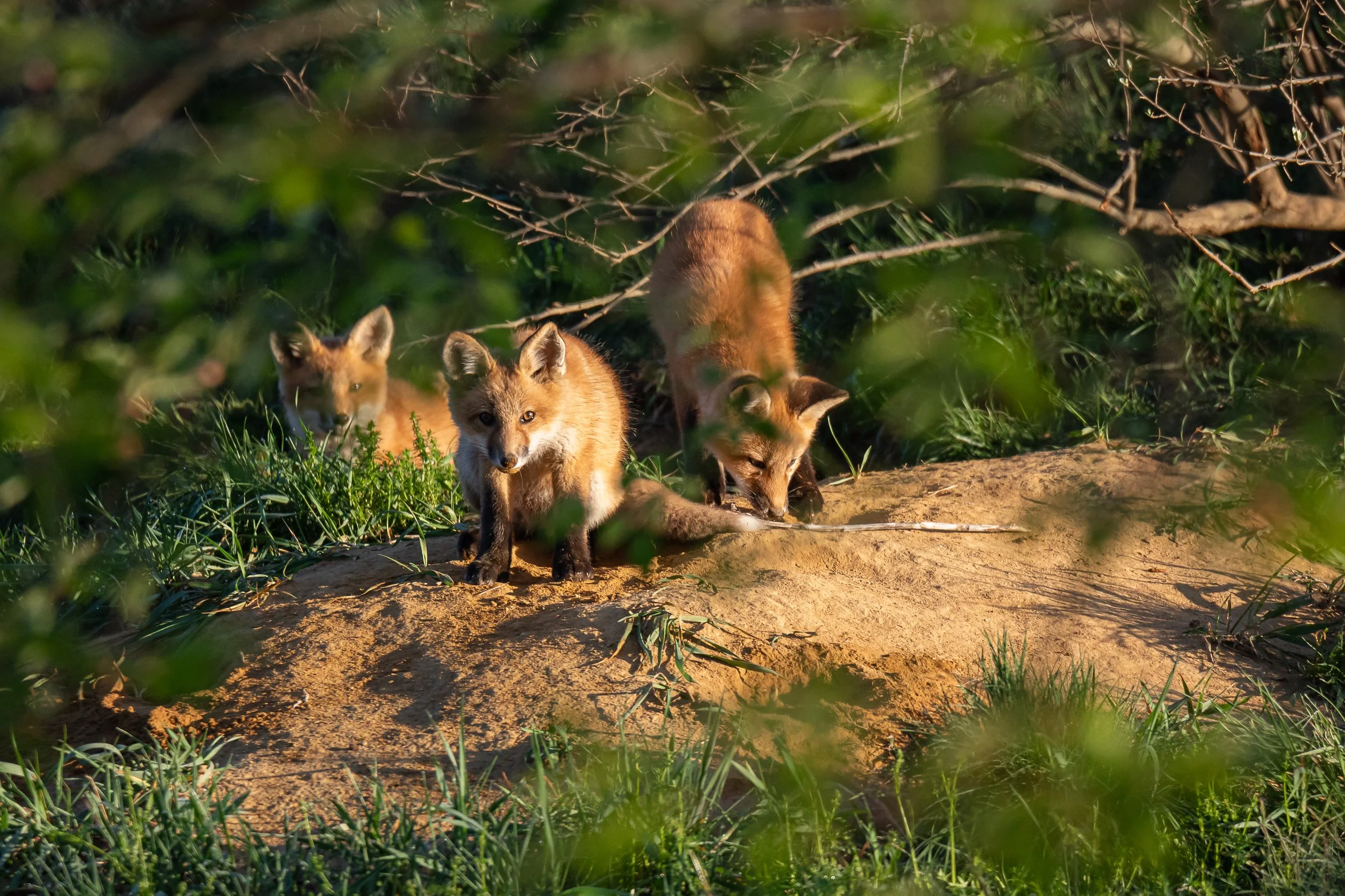
Why photograph fox kits?
Few animals in nature are as playful, cute, and surprising as fox kits. You never know what you will see them do!
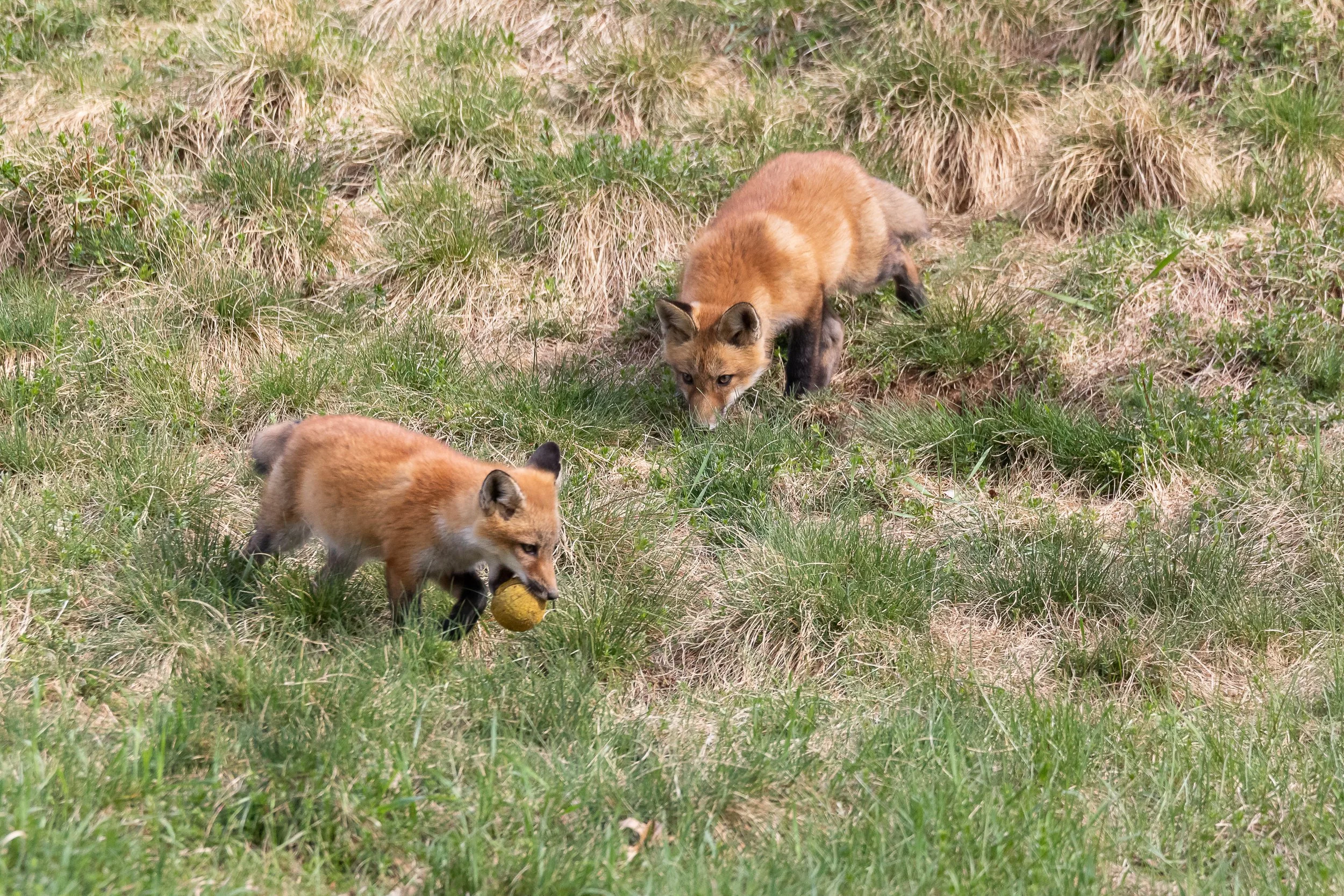
These fox kits must have stolen some kids ball and were playing catch and fetch with it!
Red foxes are common across much of the North American continent making them a subject that is possible for nearly everyone. But of course, there is a catch, it can be difficult to find and photograph a fox den successfully and ethically. In this article I will give the short version for success! As you will see April and May are a great time for this project!
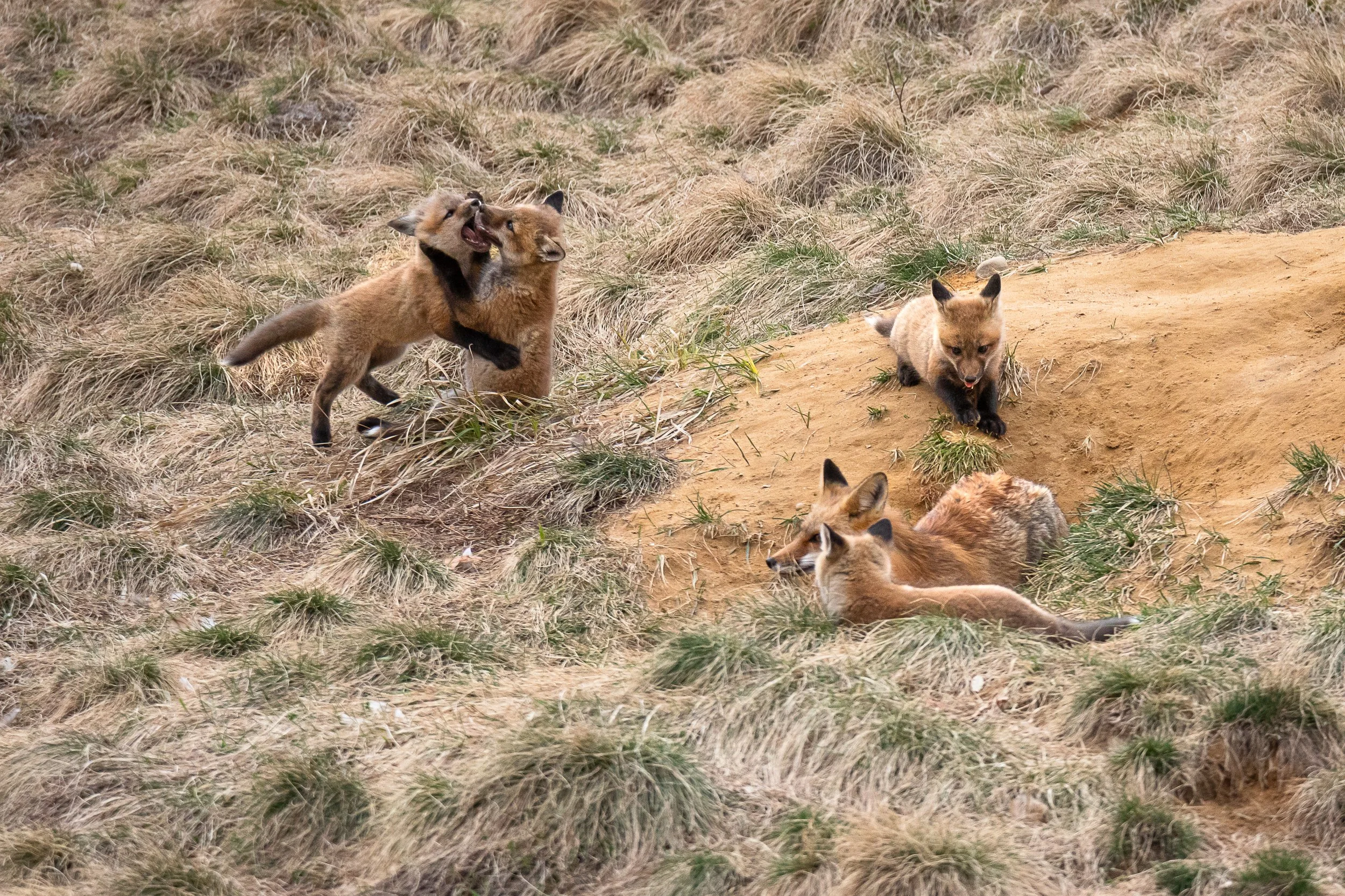
A mother fox sits with her kits at the sandy opening to her den in a field.
How to find fox dens
The best tip I can give you is that fox dens tend to be found close to human habitation in sandy spots on fields, or underneath stonewalls, old buildings, or logs. I have not found any dens deeper in the woods. You might be surprised at how close dens are to people. I believe this is done by the foxes on purpose to protect their young from the much larger coyotes which will prey upon them. Coyotes tend to avoid humans so I think foxes may feel safer closer to humans.
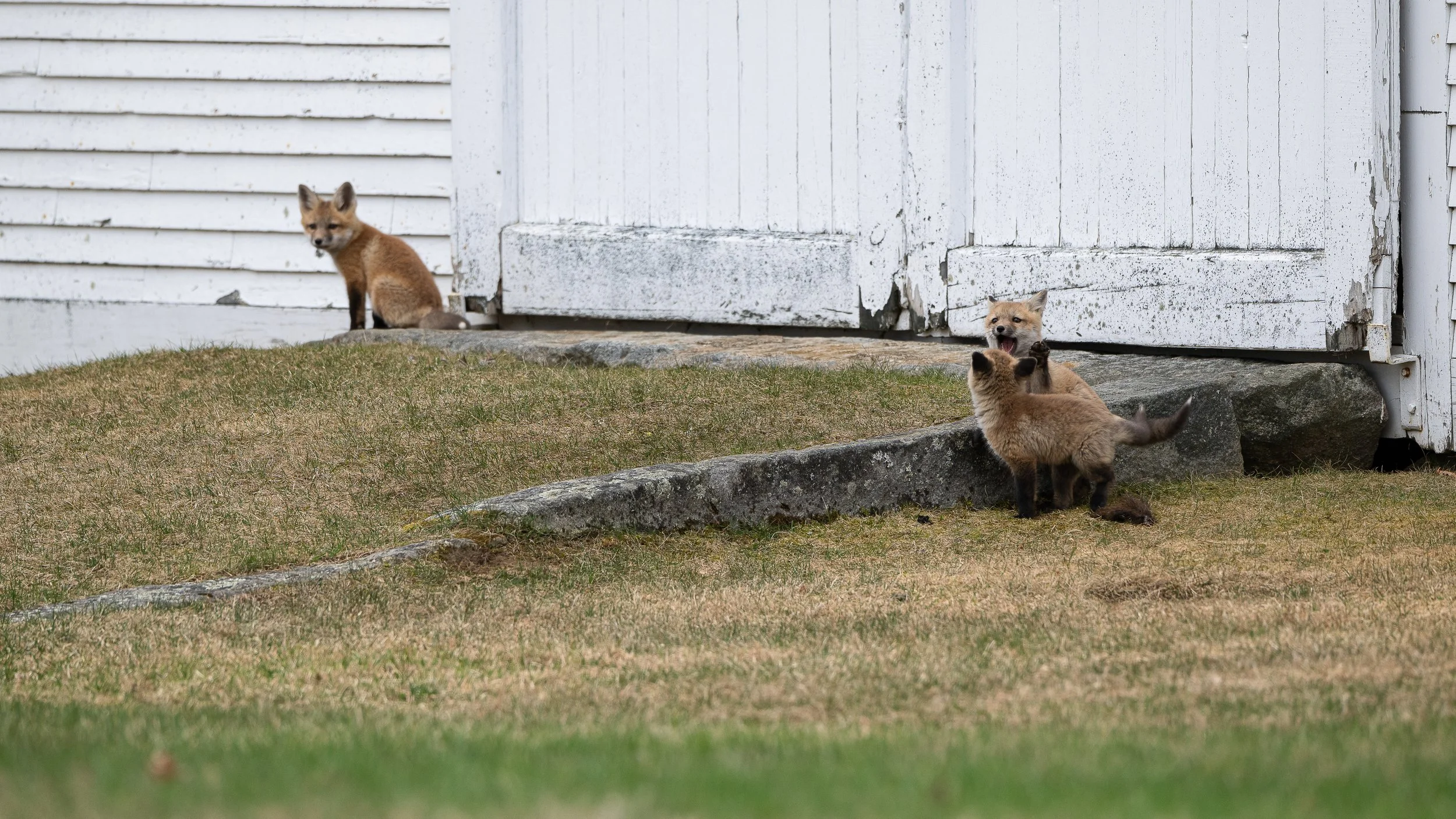
This fox family had a den right under the building!
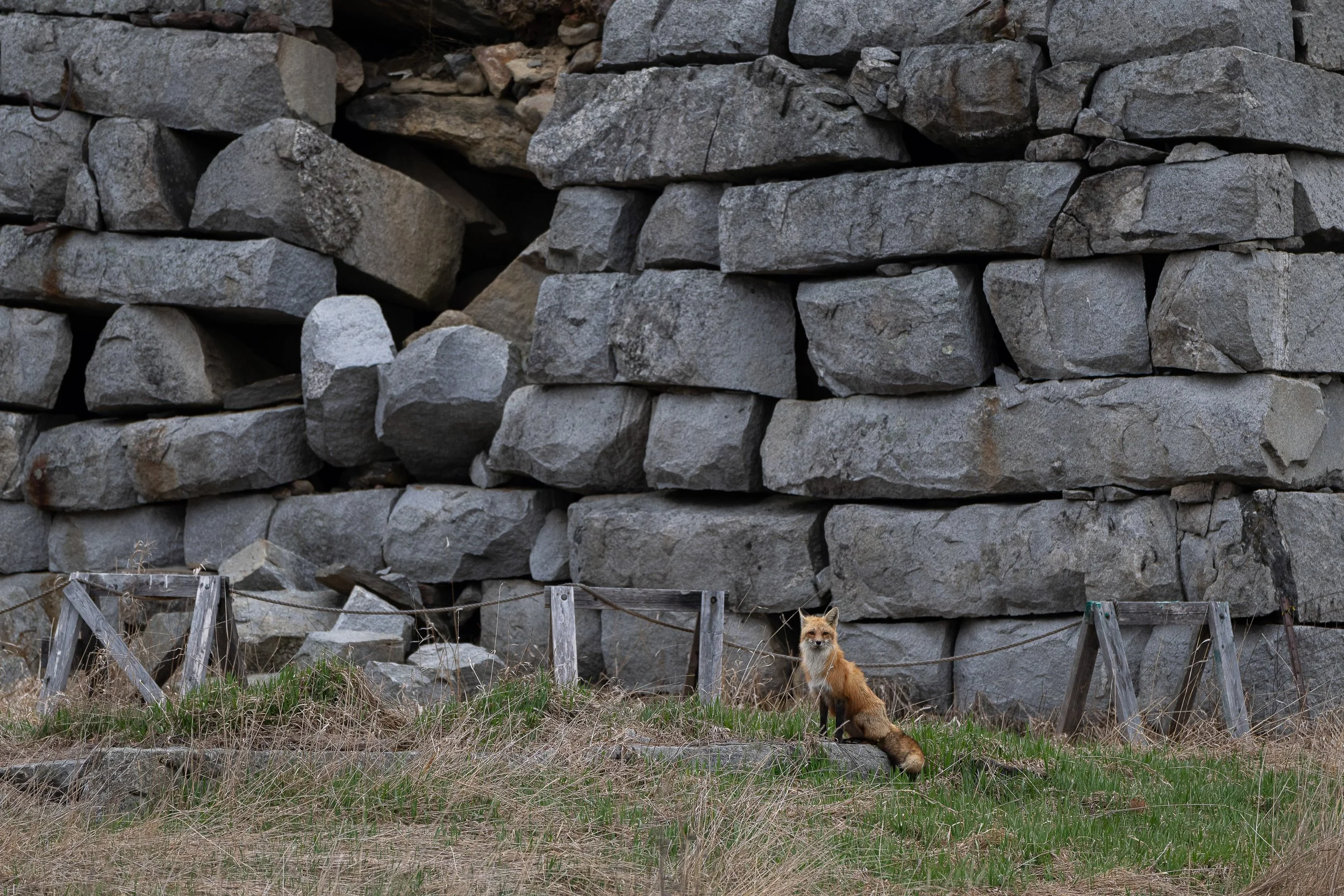
Abandoned buildings or ruins can be great fox den sites!
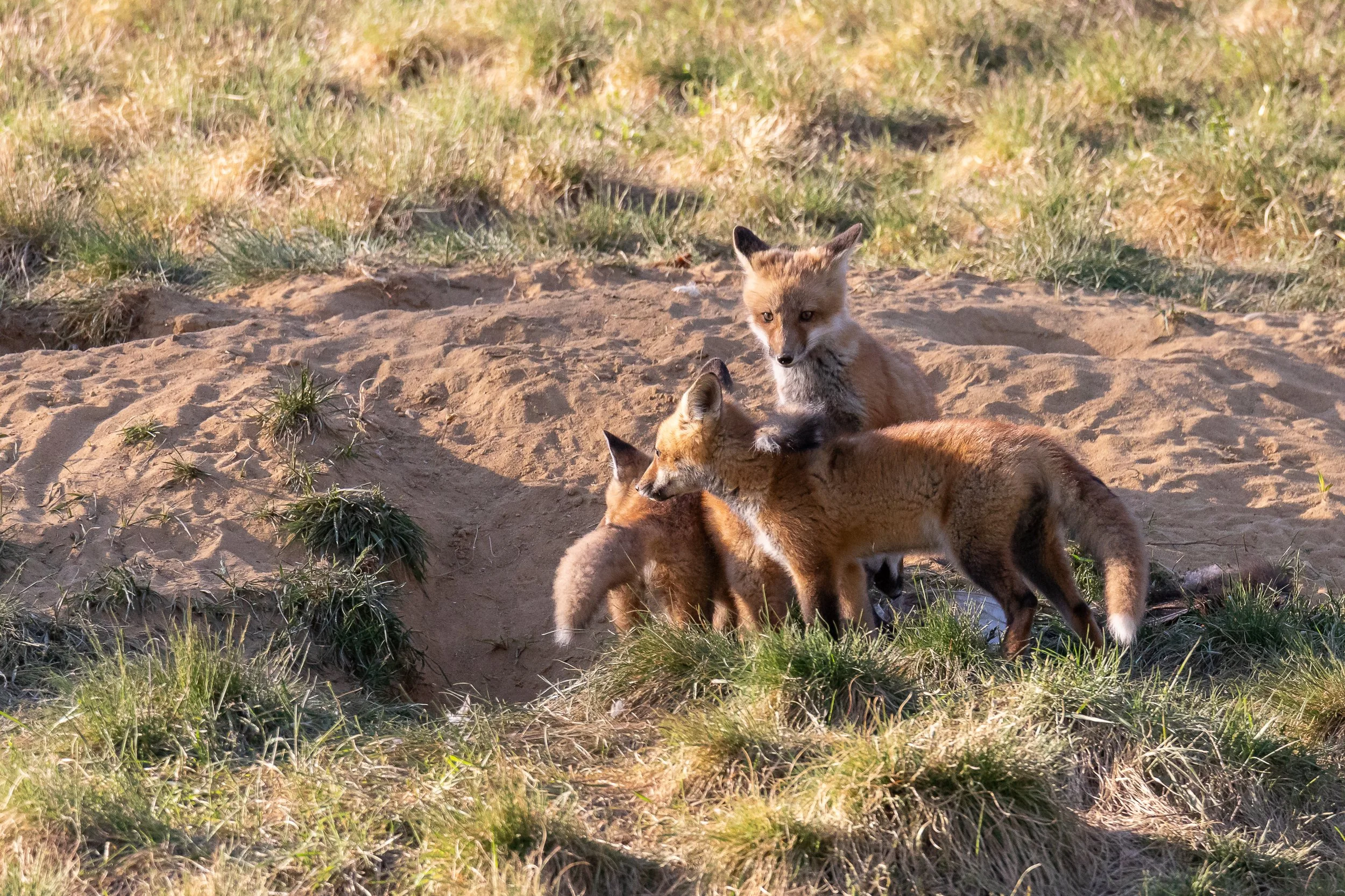
Finding dens usually comes down to understanding the timing of when kits come out of the den to play for the year.
Fox kits playing above the opening to their den in late April.
Foxes have their young, called kits, typically early in the spring around March. They will stay in the den for the first 4-5 weeks but then will come out more often to explore the world and play later around April into May. Exact timing may vary a few weeks plus or minus this time frame.
Knowing this timeframe can help you to discover a fox den. During April and early May, I would spend time very early around dawn or late during dusk driving or hiking around suitable den areas. Think edge habitats where fields and woods meet, with abandoned structures, or even cemeteries. That is how I have come to find several different den sites over the years. Another tactic is to look for fox tracks in the snow during the late winter months like February and March to see if there are areas with high fox activity.
In my experience, fox pairs will use the same general area for dens year after year, so once you find one you may get to keep returning to photograph it in future years if you follow the right ethics and fieldcraft.
Ethics & Fieldcraft
This is the most important part of this article. Please keep ethics and the welfare of the foxes in mind. This will be best for the animals and your images, now and in the future. Please keep a good distance, concealment, respect for private property, and don’t advertise the location online or by drawing attention to yourself in the field. If do these things right, you may get years of potential experiences from the den you found!
Foxes actually have multiple dens dug and if you pressure them, they will abandon the den you found.
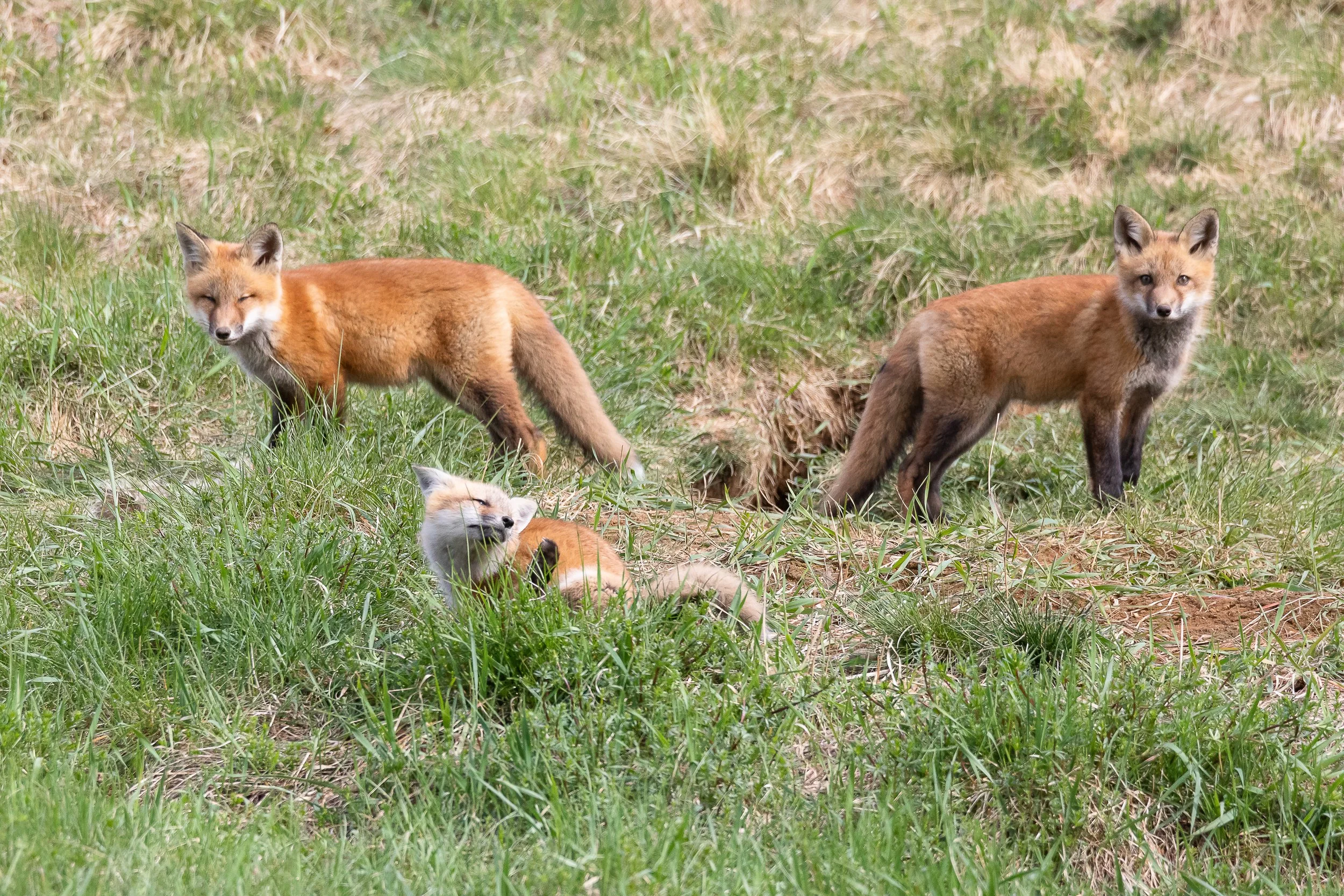
Fox dens will often be on private property. Even if you are shooting from a road or public space, I find it’s a good idea to see out the property owner and ask about photographing. Honestly you will look suspicious pointing a big lens at someone’s property. I have asked property owners before and usually they were happy to help me and appreciated the communication. One owner let me onto the property and set up an area of natural concealment by some big, downed trees. This was a win-win because it kept me hidden from other people so I wouldn’t attract more attention to his property. Property owners can of course say no and please respect that.
If it’s possible or practical, getting a blind set up will help. Foxes will naturally spend time in their den. That is the time for you to get into the blind, not when they are already out. Ditto for exiting the blind. Patience pays off! Honestly though, foxes are very aware and I have found they always know you are there, even if you follow this procedure for the blind.
Photographing fox dens will be a many day and week endeavor. Start by keeping more distance than you think is necessary and read their behavior and let them see you aren’t a threat. If they are disturbed or go hide in their den it likely that means you have spooked them. Return several times and if they are comfortable you can try to get maybe 50 to 60 meters away for a place to set up. This seems to be a good distance that doesn’t bother the foxes. You can check the distance by manually focusing your lens as most these days will tell you how many meters away you are focused. If the foxes are playing, eating, and resting in the open you know you are doing it right and will get tons of fun images like these below.
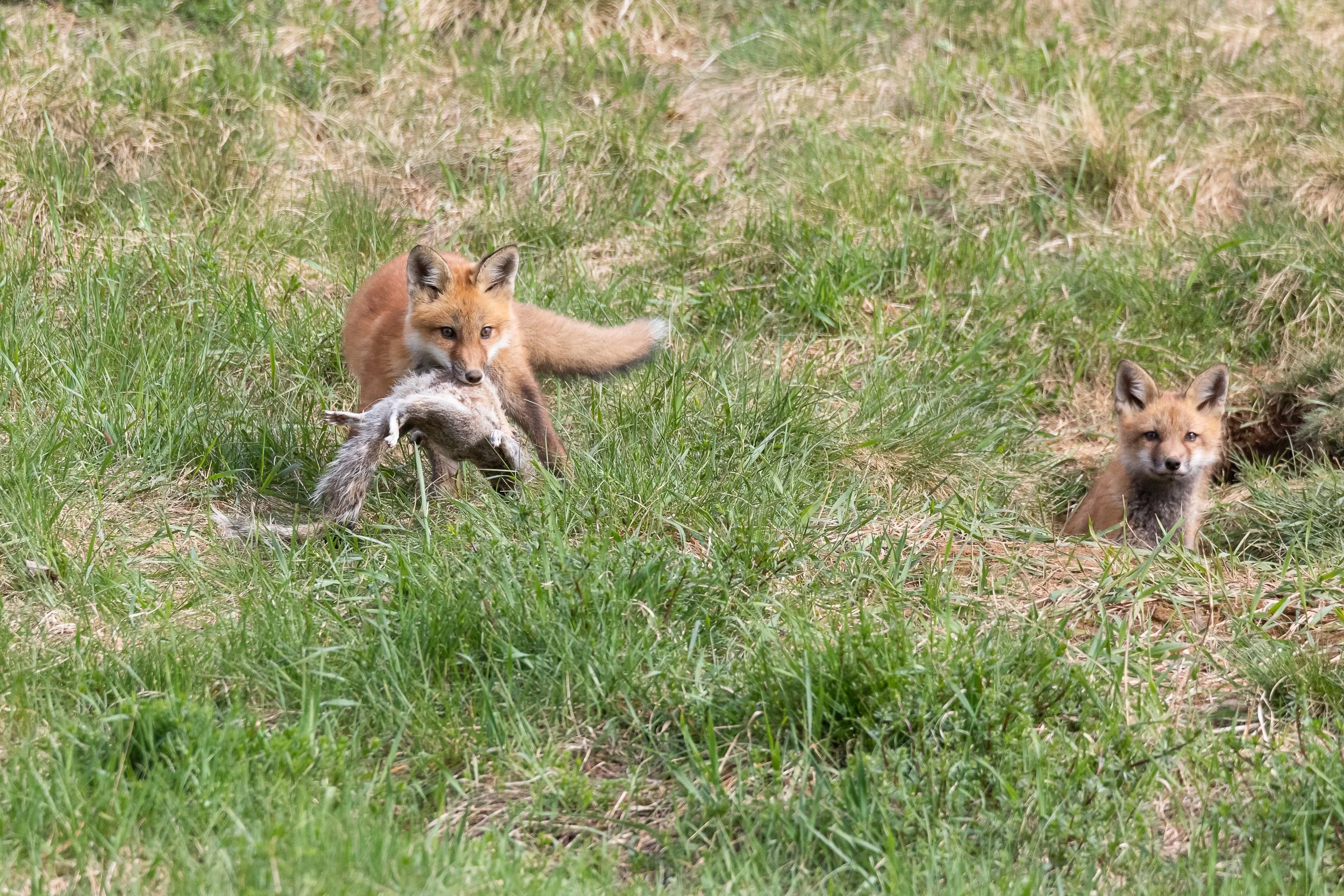
I got to watch this kit play with and then eventually eat his squirrell dinner.
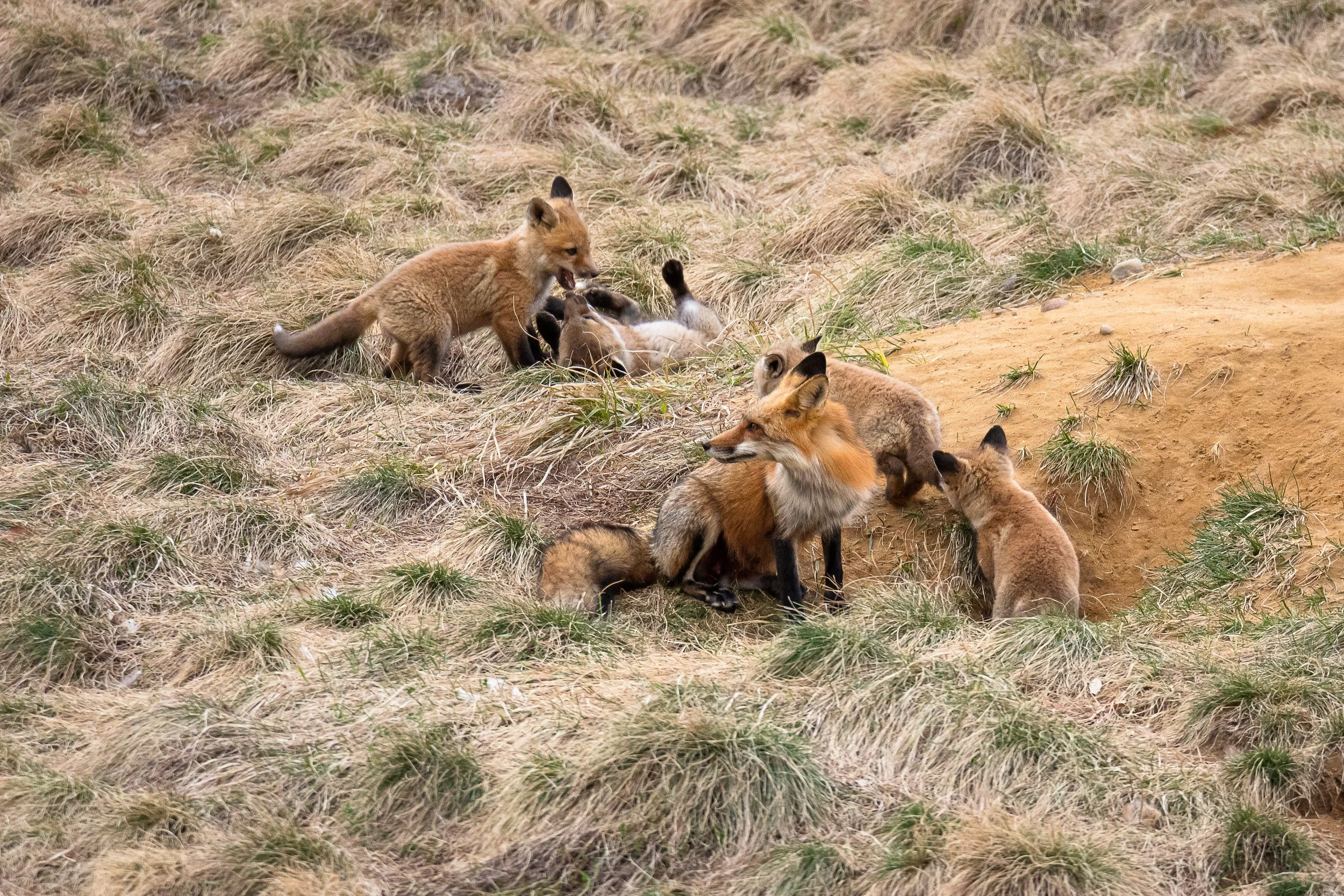
taking a slow approach to setting up around this den allowed me to witness this natural behavior.
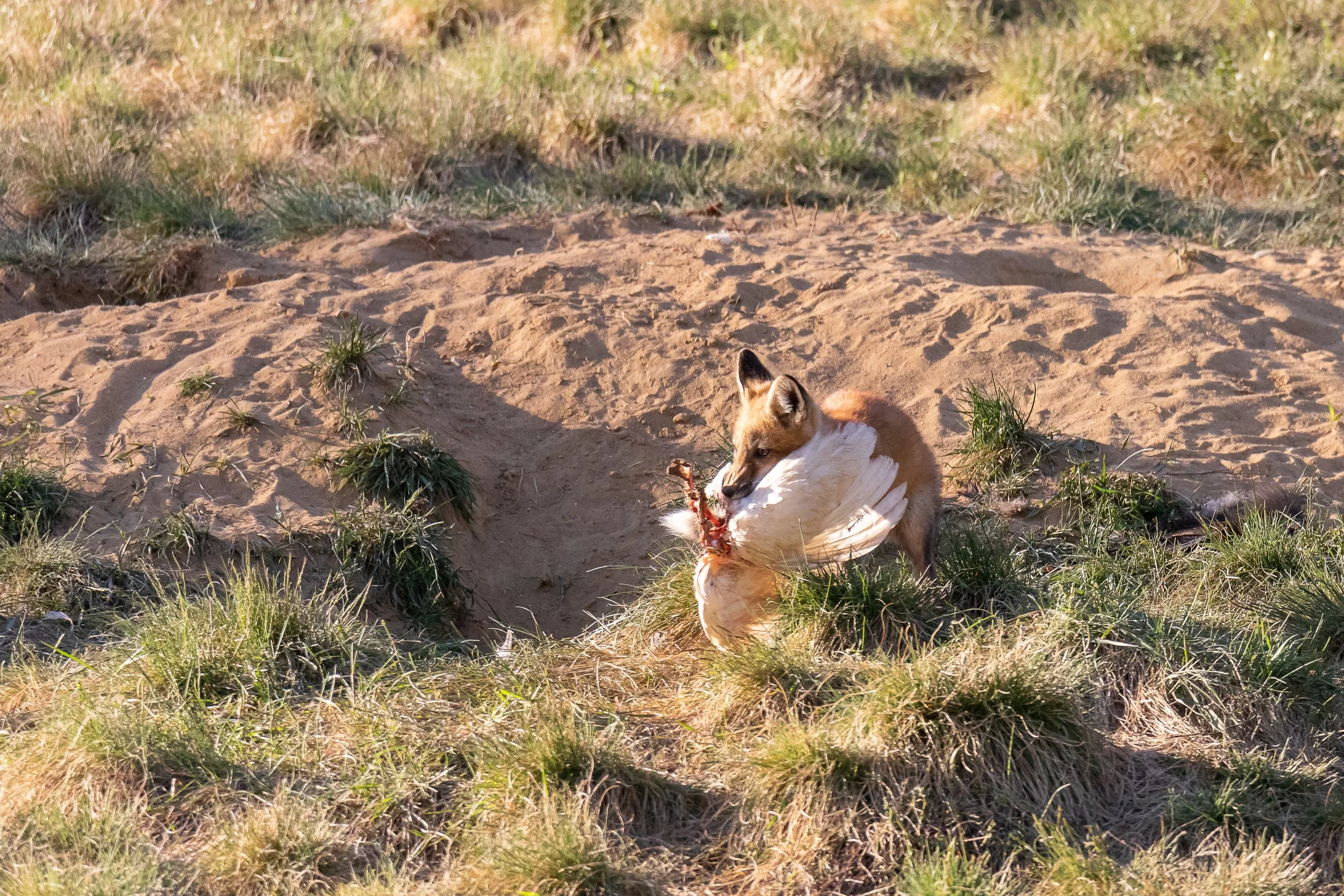
A neighbor probably wasn’t happy about this chicken being taken from their coop!
A final ethical tip is to consider not posting pictures of the fox kits or den online until they have grown up and moved out for the summer. This will protect the fox den from being mobbed and causing the foxes to abandoned it. I also recommend delayed posting because inevitably people will ask you for the location and you can avoid being in that situation in the first place by delaying posting until they have left for the season.
Camera Considerations
Having a lens that can give you 600mm of reach is very helpful here to keep the kind of distance we are talking about. A zoom lens is helpful if you want variety. A tripod is essential for working in a blind and keeping your lens from flailing around to spook the foxes. For a shutter speed I keep it around 1/1000 as a default if I have the light. Playful action can break out fast so that is the minimum, but I would go faster up to 1/2000 if there is action. Yes, you can get away with slower shutter speeds when they are still, but I have missed some good action shots because I was at 1/500 or lower and something happened.
In Conclusion
Have you ever found and photographed a fox den? How did you find it? If not, do you think this is a wildlife photography project you might try? Leave a comment and let me know!
See you in a few weeks for the May landscape photo idea post!